How To Go To Yellowstone National Park From Houston . Now do fly and drives but have done the trip from atlanta a couple of times and once from oxford, ms after picking up son from ole miss. So you’ve decided to go to yellowstone national park. 33 pictures to make you visit Yellowstone National Park from www.roundtheworldmagazine.com Flying to yellowstone national park and then renting a car is the best way to visit the yellowstone national park. Yellowstone is the largest national park outside of alaska. Yellowstone’s location is a little remote but there is a range of regional airports located near the park.
Resistance Temperature Detector Applications. The resistance vs temperature relationship is well known and is repeatable over time. There are numerous different types of temperature sensors including thermistors, resistance temperature detectors, thermocouples and infrared sensors.
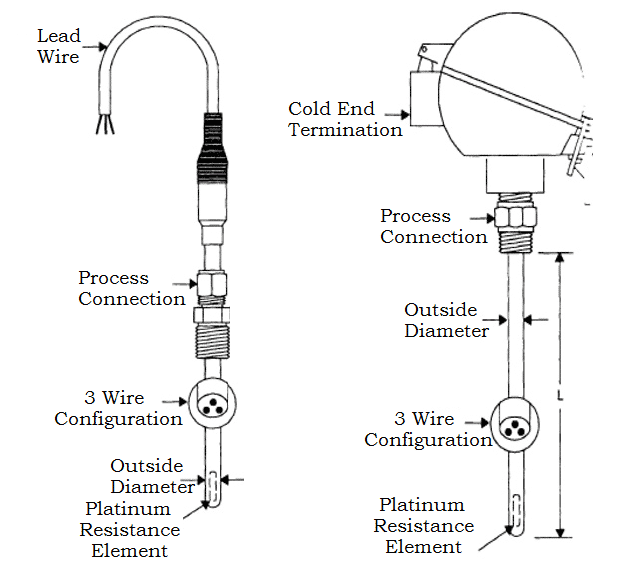
Resistance Temperature Detector, RTD Component, Working from electricalfundablog.com
Many rtd elements consist of a length of fine wire wrapped around a ceramic or glass core but other constructions are also used. A resistance temperature detector (also known as a resistance thermometer or rtd) is an electronic device used to determine the temperature by measuring the resistance of an electrical wire. This is the basic resistance temperature detector working principle.
These Detectors Are Frequently Used In The Plastics Industries And Many Others.
Applications of resistance temperature detector (rtd) in communication and instrumentation, it is used as a temperature sensor and amplifier. An rtd is a passive device. The metals having a positive temperature coefficient is used for the construction of rtds.
The Resistance Temperature Detector Uses The Change In Electrical Resistance Of The Sensing Element To Determine Its Temperature.
The applications of resistance temperature detectors in various industries include: A resistance temperature detector (rtd). Sensors such as resistance temperature detectors (rtds), bellows, pressure detectors, etc., are used to measure various plant parameters such as temperature and pressure.
In Operation, A Small Excitation Current Is.
Unbalanced wheatstone bridge method are invariably used to measure the resistance. Resistance temperature devices rtd applications besides measuring temperature, rtds are also used to construct other sensors, for example, bolometers and gas mass flow meters. When to use resistance temperature detectors?
In Industrial Applications, A Prt Is Known To Measure Temperatures As High As 1500 Degree Fahrenheit While Copper And Nickel Can Measure Only To A Maximum Of 400 Degree Fahrenheit.
An rtd (resistance temperature detector) is a sensor whose resistance changes as its temperature changes. The output signal of the sensors is processed electronically and sent to various circuits that serve as controls, displays, and alarms. This wire is referred to as a temperature sensor.
The Resistance Increases As The Temperature Of The Sensor Increases.
Many rtd elements consist of a length of fine wire wrapped around a ceramic or glass core but other constructions are also used. Care must be taken to eliminate moisture and vibration effects can be troublesome as well. In industrial applications, a prt is known to measure temperatures as high as 1500 degree fahrenheit while copper and nickel can measure only to a maximum of 400 degree fahrenheit.


Comments
Post a Comment